Explore our in-depth project stories—see how advanced in-orbit detection delivers actionable insights, protects assets, and drives sustainable space operations for leading organizations.

Our detection pipeline begins with a high-performance 150mm Cassegrain telescope, paired with a state-of-the-art 135fps sCMOS sensor. This optical assembly is specifically optimized for the challenging LEO environment, where high-velocity debris creates significant motion blur.
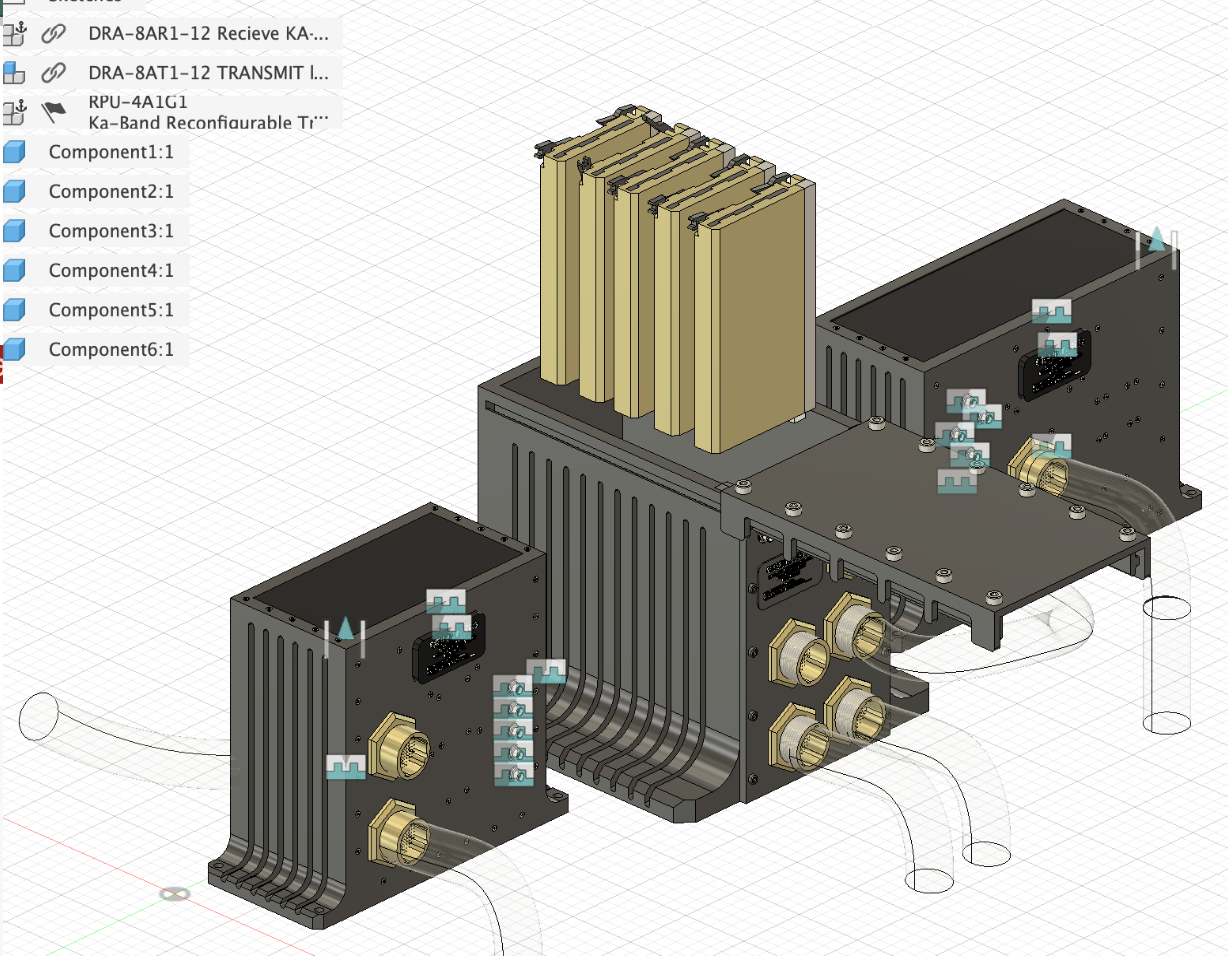
At short ranges, Cassiopeia’s Phased Array Radar provides rapid, high-resolution debris tracking while simultaneously supporting satellite communications. The system is able to achieve near-space resolution across a constellation-without saturating communication bandwidth-by electronically steering multiple radar beams and transmitting only compressed orbital state vectors.

Our terminal tracking phase utilizes a phased array comprising 288 elements, with its defining advantage being its independent beam control, which leverages electronic steering to manipulate the phase of each element without physical . This ability allows the array to instantly switch between multiple debris targets or compensate for satellite jitter, maintaining a "hard lock" even during complex maneuvers. By providing direct Doppler velocity measurements and high-rate angular updates, the phased array serves as the definitive validator for the orbital models initiated by our optical sensors.

Sensing and satellite communications. The plot carries on with the transmission of the orbital data in a compressed form. Saves bandwidth and reduces data overhead.
Lorem ipsum dolor sit amet, consectetur adipiscing elit. Suspendisse tincidunt sagittis eros. Quisque quis euismod lorem.
.avif)