Discover our advanced solution for tracking orbital debris. Explore our innovative product designed to protect satellites, enhance situational awareness, and ensure the future of space operations. Browse below to learn more about the technology.
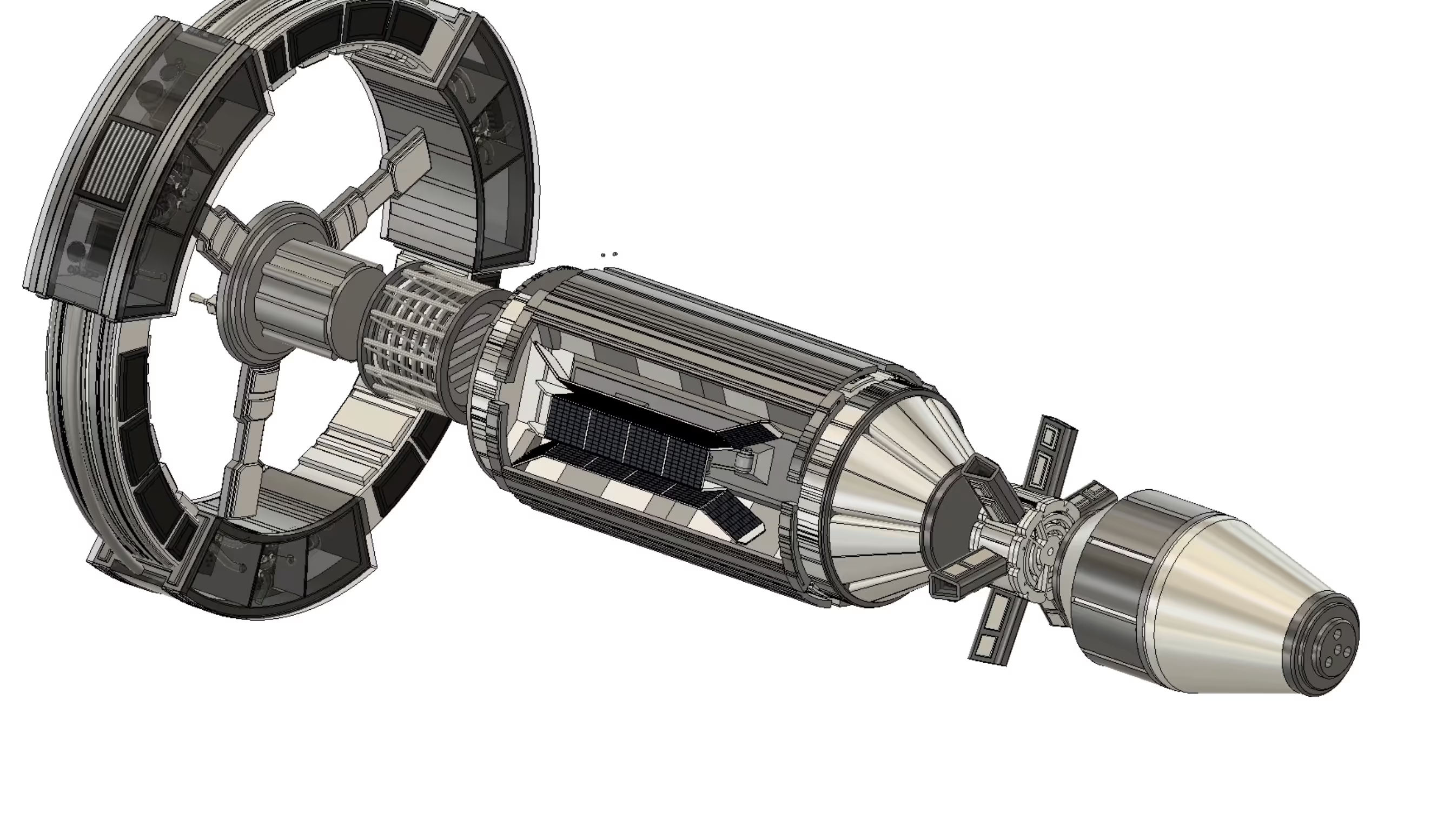

![image of tech innovation [background image]](https://cdn.prod.website-files.com/694a1cc5882bb55e9a2477fb/695fd0355b6d07d43e3dbcfb_Screenshot%202026-01-08%20at%2011.38.51%E2%80%AFPM.avif)


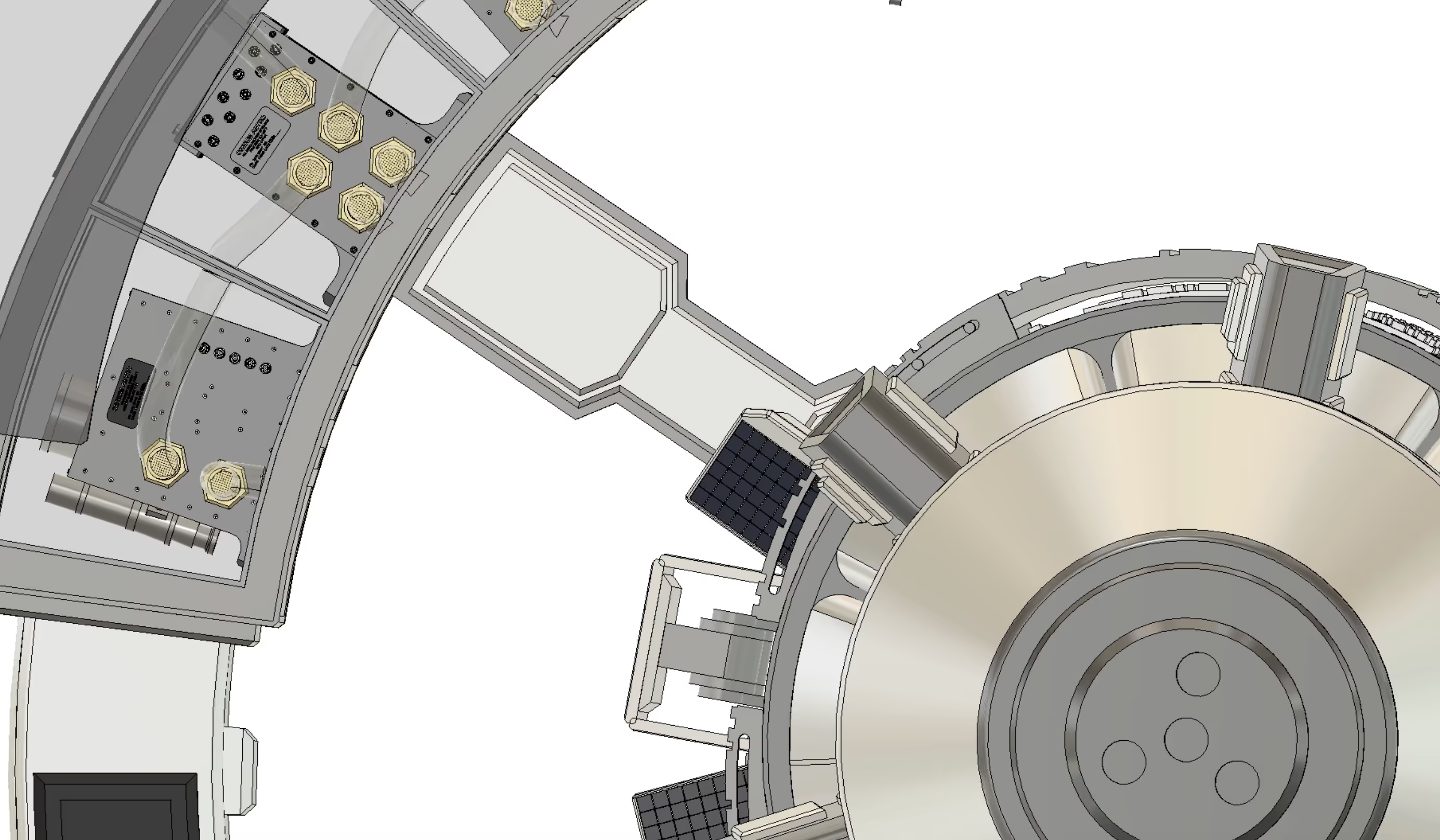

The sensor suite is engineered to detect space debris smaller than 10 cm, leveraging innovative, high-precision technologies to deliver reliable and advanced orbital awareness.
Learn moreUnlike any other traditional concept of space surveillance that continuously relies on radar scanning, Cassiopeia implements a passive-first detection pipeline. By doing optical sensing for wide-area monitoring with very low energy consumption, power-intensive sensors are turned on only when needed, thus dramatically reducing power consumption and enabling sustainable long-term operation in orbit.
Current systems mainly concentrate on large debris that can be tracked. But Cassiopeia is specifically designed for tracking 1-10 cm debris that is too small for ground-based radar systems, yet large enough to cause harm to operational satellites.
Cassiopeia combines three sensors create a "Hybrid Optical-Active" pipeline that is perfectly tailored for constraints of a wider satellite network; the optical sensor acts as the "Wide-Lens," scanning the horizon for the sunlit glint of LTN space debris, meanwhile the LiDAR and phased array radar acts as the "Precision-Probe," firing into the telescope’s field of view to "touch" the debris and confirm its position
Instead of trying costly post-collision cleanup efforts, the Cassiopeia system prioritizes prevention of collisions. By allowing precise prediction and minimizing non-collision avoidance maneuvers, the system prolongs satellite life and prevents the proliferation of space debris, thereby countering the Kessler Syndrome.
Flexible subscriptions for real-time orbital debris intelligence. Select the coverage and features that fit your mission needs.
Plans include these features:
Live debris tracking updates
High-resolution orbital maps
Real-time collision alerts
Multi-sensor data fusion
Customizable coverage zones
API access for integration
Historical debris analytics
Priority support
Discover how in-orbit innovation is transforming debris detection and protecting the future of satellite infrastructure.

.avif)